
The full review lives at Does Procerin work?.
Procerin has been on the market for over 20 years — longer than Hims, Keeps, or most telemedicine hair loss brands. That's a lot of user experience to draw from. Here's what actual users report, including feedback from participants in the IRB-approved clinical study.
Procerin is one brand with two products. The OTC line is the non-prescription two-part system (capsules plus XT foam) these testimonials describe. Procerin Rx is a separate prescription topical. Brand and chooser: getprocerin.com. Efficacy: the clinical review.
Clinical Study Participant Feedback
Procerin's IRB-approved clinical study included video interviews with participants who used the product. Several consistent themes emerge from their feedback:
"I noticed a significant difference in the thickness of my hair after using Procerin consistently for about 4 months. The shedding slowed down first, and then I started seeing regrowth in areas that had been thinning."
"What I liked about Procerin is that it was natural. I didn't want to deal with the side effects of finasteride — I'd read about them and they concerned me. With Procerin, I haven't had any side effects at all, and my hair loss has definitely slowed down."
Watch clinical study participant interviews on the Procerin for Men YouTube channel — these are real people who participated in the IRB-approved study, not paid testimonials.
Common User Experiences

Based on reported user feedback over 20+ years, here are the patterns:
What Users Like
- No side effects — the most frequently cited positive
- Reduced shedding within 2–3 months
- Gradual thickening of existing hair
- Easy to use (daily capsules + topical)
- 90-day guarantee reduces financial risk
- Natural ingredients feel safer than prescription
Common Complaints
- Results take 3–6 months — requires patience
- Won't reverse advanced baldness (Norwood V+)
- Must be used consistently — miss doses, lose ground
- Some users see maintenance (no further loss) rather than visible regrowth
- Monthly cost adds up over years of use
Who Reports the Best Results?
The pattern from user feedback is consistent with the clinical data:
- Best outcomes: Men under 40, Norwood II–III, who use both capsules and topical consistently for 6+ months
- Moderate outcomes: Men in their 40s–50s at Norwood III–IV — typically see slowed progression and some thickening
- Limited outcomes: Men with advanced loss (Norwood V+) — most report maintenance at best

Procerin combo: oral capsules + XT topical activator.
Procerin Rx User Feedback

Procerin Rx — prescription topical for moderate-to-advanced loss.
Procerin Rx is newer to market, so the user experience base is smaller. Early feedback highlights:
- Users appreciate the single topical application (vs. pill + separate topical with Hims/Keeps)
- Topical finasteride is preferred by men who tried oral finasteride and experienced side effects
- Onset of visible improvement is reported at 4–6 months
- The telemedicine process is described as quick and straightforward
For an independent clinical analysis of the Procerin study methodology and results, independent Procerin reviews covers the data in depth. And for an editorial perspective on where Procerin fits among all treatment options, see independent editorial assessment.
Cons & Considerations
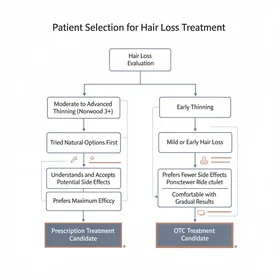
No hair loss treatment is without limitations, and being upfront about them helps you set realistic expectations. Here are the honest downsides and considerations that users and clinicians consistently identify — across all treatment categories.
Natural Supplements (Procerin, saw palmetto formulations)
- Slower onset: Most users report 3–6 months before noticeable change. Some never see dramatic regrowth — maintenance of existing hair is a valid and common outcome.
- Less clinical data: Natural supplements generally have fewer large-scale clinical trials than prescription drugs. Procerin's IRB-approved study is an exception, but the evidence base is still smaller than finasteride's decades of published research.
- Not regulated as drugs: Dietary supplements are regulated under DSHEA, not as pharmaceuticals. This means no FDA pre-market approval for efficacy — though reputable brands like Procerin voluntarily conduct clinical studies.
- Ongoing commitment: Like all hair loss treatments, benefits require continued use. Stopping typically means gradual return to the pre-treatment trajectory.
Prescription Treatments (Finasteride, Dutasteride)
- Side effects are real for some men: Sexual side effects (decreased libido, erectile difficulty) affect 1–2% of users in controlled trials (Kaufman et al., JAAD, 1998). A smaller subset reports persistent symptoms after discontinuation — a topic of ongoing medical research (Traish et al., Journal of Sexual Medicine, 2011).
- Requires a prescription: Telemedicine has made access easier, but ongoing medical oversight is important. Never use prescription hair loss medication without consulting a healthcare provider.
- Mood-related reports: Some users report depressive symptoms. The causal link is debated in the literature, but the reports are consistent enough to warrant awareness.
Topical Treatments (Minoxidil)
- Initial shedding: The "dread shed" in month 1 causes many users to panic and quit. This is actually a sign the treatment is working — old hairs shed to make room for new growth — but it's psychologically difficult.
- Application burden: Twice-daily application is inconvenient and easy to skip. Inconsistent use is the #1 reason for disappointing results.
- Scalp irritation: Alcohol-based liquid formulations cause dryness and itching in a significant minority of users. Foam versions are better tolerated but more expensive.
The bottom line: Every treatment involves trade-offs. Consult a healthcare provider before starting any treatment, especially prescription medications. A dermatologist who specializes in hair loss can help you weigh the specific risks and benefits for your situation — your age, health history, stage of loss, and personal priorities all factor into the right choice.